What a Heating Contractor Does for HVAC Systems
A heating contractor is the person you call when the house has decided to become a meat locker, the furnace is making a noise that sounds too ambitious for a household appliance, or a new heat pump needs to be installed without turning the utility bill into a monthly jump scare.
More formally, a heating contractor works in the broader field of HVAC, which covers heating, ventilation, and air conditioning. That field includes installing, maintaining, and repairing heating and cooling equipment, along with the connected work that keeps those systems safe and useful. In practice, the job sits at a busy intersection: mechanical equipment, airflow, refrigerant, combustion, controls, plumbing connections, and sometimes electrical coordination. It is a trade where a person may spend one hour talking through equipment sizing with a homeowner and the next hour crouched beside a furnace with a meter, a flashlight, and the expression of someone who has heard this exact rattle before.
The title “heating contractor” can sound narrower than the work actually is. Yes, heat is the star of the show. Furnaces, boilers, heat pumps, air handlers, ductwork, thermostats, and related controls are all part of the territory. But because HVAC systems are connected systems, heating work often overlaps with air conditioning maintenance, air conditioning repair, ventilation, and the plumbing or electrical work associated with the equipment. That does not mean one contractor automatically does every trade under the sun. A Plumber, Electrician, Air conditioning contractor, Lighting contractor, and Septic system service provider all have distinct roles. Still, heating equipment rarely lives in splendid isolation. It shares space, power, piping, drainage, ducts, refrigerant lines, and controls with other building systems.
That is why a good heating contractor does not merely ask, “Is the furnace on?” They ask what the whole system is doing, what the building needs, and whether the equipment was installed and maintained in a way that gives it a fighting chance.
The job is bigger than “make it warm”
The simplest version of the job is easy to understand: a heating contractor installs and services equipment that heats indoor spaces. The real version has more moving parts, and several of them like to fail on the coldest day of the year, because machinery apparently enjoys drama.
A heating system must create heat, move it where it belongs, respond to controls, operate safely, and do all of that without wasting more energy than necessary. In a forced-air system, that means the furnace or heat pump must work with the blower, ductwork, filters, supply registers, return air, and thermostat. In a system tied to water, the heating equipment may rely on pumps, piping, valves, and heat exchangers. If the system also provides cooling, the same air handler or ductwork may serve air conditioning in summer and heating in winter. One bad design choice, one sloppy installation detail, or one ignored maintenance issue can make the whole arrangement act like it was assembled after a long lunch.
The heating contractor’s work usually falls into three broad categories: installation, maintenance, and repair. Those categories sound tidy on paper. On a real service call, they blur. A furnace repair service call might reveal that the unit was installed with poor airflow. A maintenance visit might uncover a failing part before it becomes a no-heat emergency. A heat pump installation might require careful coordination with electrical work, refrigerant charging, and thermostat setup. HVAC is not one appliance. It is a system, and systems punish guesswork.
Installation: where comfort is won or lost early
A heating contractor’s most important work often happens before the equipment ever runs. Installation is not just sliding a shiny new box into place and admiring the manufacturer’s sticker. Proper installation includes selecting equipment that fits the building’s needs, connecting it correctly, setting it up properly, and verifying operation.
Equipment sizing matters more than many people expect. Bigger is not automatically better, despite what every pickup truck commercial would have us believe. Oversized heating equipment can cycle on and off too often, which can affect comfort and wear. Undersized equipment may struggle during colder conditions. For air conditioners and heat pumps, correct sizing and proper refrigerant charging are especially important because poor charging can increase energy use and raise the risk of failure. In plain English, a system that is badly installed may cost more to run while also being more likely to complain, break, or sulk.
A heating contractor installing a heat pump, for example, has to think about both heating and cooling performance. A heat pump installation is not just a winter decision. The unit may provide air conditioning during warm months too, which means the contractor has to consider airflow, refrigerant lines, controls, and seasonal performance. The same system that keeps a living room warm in January may be expected to cool bedrooms in July. If the installation is careless, the homeowner gets two seasons of disappointment for the price of one.
This is also where the relationship between a Heating contractor and an Air conditioning contractor becomes clear. In many HVAC businesses, the same company handles both heating and cooling equipment. That makes sense, because heating and air conditioning often share components, ducts, thermostats, and service practices. Air conditioning repair service and furnace repair service may appear as separate service https://find-open.com/orange-orange-ca/service-lion-plumbing-heating-air-electric-10945191 categories, but they often live under the same HVAC roof.
Maintenance: the unglamorous hero
Maintenance rarely gets applause. Nobody invites neighbors over to admire a clean blower compartment. Yet regular HVAC maintenance is one of the most practical ways to reduce trouble. Heating equipment, like air conditioning equipment, benefits from inspection, cleaning, adjustment, and testing. The point is not to perform ritualistic wrench-twirling. The point is to catch problems while they are still small enough to behave.
Air conditioning maintenance and an air conditioning tune-up are familiar phrases because cooling systems need regular attention. Heating systems deserve the same respect. A contractor may check system operation, inspect components, verify airflow, evaluate controls, look for unusual wear, and make sure the equipment is not operating in a way that invites failure. With cooling equipment, refrigerant charge and airflow are especially important. With heating equipment, safety and reliable operation are front and center.
Maintenance also gives the contractor a chance to see the system as it actually lives. That matters. A piece of equipment may look fine in a brochure and still suffer in a cramped mechanical room, behind a filter that has not seen daylight since a different presidential administration, or attached to ductwork that belongs in a museum of questionable decisions. Contractors learn quickly that buildings tell the truth. The thermostat may say one thing, the occupants may say another, and the equipment usually has its own testimony.
A useful maintenance visit is not a magic spell against breakdowns. Parts can still fail. Motors, controls, sensors, pumps, and other components do not send polite calendar invitations before giving up. But maintenance improves the odds. It also helps homeowners or building managers make decisions before the emergency version of the decision shows up wearing boots and carrying a space heater.
Repair: diagnosis before replacement
Repair work is where heating contractors earn their coffee. A no-heat call can be simple, complicated, or simple-looking in a way that becomes complicated at 4:45 p.m. The best contractors diagnose before they replace parts. This sounds obvious, but it is the line between professional service and expensive guessing.
A furnace repair service call may involve checking the equipment sequence of operation, controls, ignition, airflow, electrical components, and safety devices. A heat pump repair may require attention to refrigerant-side performance, outdoor unit operation, indoor airflow, thermostat settings, and auxiliary heat behavior. Air conditioning repair may involve many of the same diagnostic habits, especially where the cooling system shares indoor equipment with the heating system.
The important thing is that the contractor is not simply asking whether a part is dead. They are asking why the system is failing to do its job. If a motor fails because airflow has been restricted for years, replacing only the motor may Plumber get the system running again, but it does not solve the underlying problem. If a heat pump is low on refrigerant, adding refrigerant without understanding the situation is not the same thing as a sound repair. If a thermostat is blamed for everything, the thermostat should probably hire a lawyer.
Good repair work also includes judgment. Sometimes repairing an older system makes sense. Sometimes the repair cost, equipment condition, comfort problems, and expected future reliability point toward replacement. A responsible contractor explains the trade-off without theatrical doom. There is a big difference between “this part failed and can be replaced” and “this system has multiple issues, and money spent here may not buy much time.” Customers deserve that distinction.
The ventilation part of HVAC is not decorative
The V in HVAC tends to get less attention because it does not have the emotional force of “no heat” or “no cooling.” Still, ventilation and airflow are central to comfort and system performance. A heating contractor who ignores airflow is like a chef who ignores the oven temperature and blames the potatoes.
In forced-air systems, heated or cooled air must move through ducts, registers, filters, and returns. If airflow is poor, rooms may be uneven, equipment may run inefficiently, and components may face extra stress. A home can have perfectly capable heating equipment and still feel wrong because the air distribution is poor. One bedroom becomes a sauna, another becomes a walk-in cooler, and the hallway achieves a climate known only to hallway science.
Ventilation work may include evaluating ducts, returns, filters, and air movement. Some contractors also perform duct cleaning as part of broader HVAC service offerings. Whether duct cleaning is needed depends on the situation, not on fear-based salesmanship. The larger point is that air must move properly. Equipment cannot overcome every distribution problem by brute force, and turning up the thermostat is not a design strategy.
Where plumbing enters the picture
Heating and cooling systems can involve plumbing-adjacent work, and in many service businesses plumbing and HVAC sit under the same roof. That is not random. The same building that needs furnace repair service may also need water heater repair, water heater installation, plumbing leak repair, drain cleaning, Rooter service, Hydrojetting, plumbing repiping, or water softener installation. Those are distinct services, but they often belong to the same practical universe of mechanical systems in homes and buildings.
A heating contractor may encounter plumbing connections where heating equipment uses water, where condensate needs drainage, where equipment connects to fuel systems, or where a water heater shares space and service concerns with HVAC equipment. A Gas installation service may be relevant where gas-fired equipment is involved, subject to the proper licensing and local requirements. Sewer hookups, sump pump service, and water pump installation also fall within the broader plumbing, heating, and air-conditioning trade classification, though that does not mean every heating contractor performs every one of those tasks.
This is where choosing the right provider matters. A company that offers both HVAC and plumbing may be convenient because the technicians and departments can coordinate. But the person handling the work should be qualified for that specific task. A great air conditioning repair technician is not automatically the right person for a septic system service call. The septic tank is not impressed by enthusiasm.
Where electrical work fits, and where it does not
Heating and cooling equipment needs electrical power and controls. Motors, boards, thermostats, disconnects, pumps, blowers, compressors, and ignition systems all depend on electrical components. A heating contractor routinely works with the electrical side of HVAC equipment during installation, maintenance, and repair. That may include testing circuits within the equipment, wiring low-voltage controls, or verifying that components receive proper power.
But electrical contracting is a separate trade classification. An Electrician has a distinct role, especially where building wiring, panels, circuits, lighting, or electrical infrastructure are involved. A Lighting contractor is also not the same thing as a heating contractor, even if both may spend time in ceilings and occasionally mutter at junction boxes.
The practical boundary depends on the work, the equipment, and local licensing rules. HVAC contractors commonly handle electrical work associated with the heating and cooling equipment they install or service. Broader electrical changes may require an electrician. This distinction keeps everyone safer and reduces the likelihood that a simple equipment replacement turns into a surprise electrical adventure, which is nobody’s favorite genre.
Heating contractors and air conditioning contractors often overlap
Because heating and cooling systems are tied together, many customers meet the same contractor twice a year: once when the air conditioner misbehaves during a hot spell, and once when the furnace chooses a cold morning for its personal crisis. An Air conditioning contractor focuses on cooling systems, but HVAC contractors often install and maintain both heating and cooling equipment.
Air conditioning repair service is its own recognized service category, and for good reason. Cooling equipment has specialized requirements, including refrigerant handling, charging, airflow, and system diagnostics. Technicians involved in maintaining, servicing, repairing, or installing equipment such as air conditioners and refrigeration equipment may fall under requirements tied to refrigerant work. That is one reason professional training and compliance matter. Refrigerant is not a seasoning. You do not sprinkle in “a little extra” and hope dinner improves.
For heat pumps, the overlap becomes even tighter. A heat pump is heating equipment and cooling equipment, depending on the season and operating mode. A contractor servicing a heat pump needs to understand both sides of that identity. If the person only thinks in furnace terms, they may miss cooling-side issues. If they only thinks in air conditioning terms, they may miss heating performance concerns. Heat pumps reward contractors who can think in both directions.
What a typical service visit may involve
Every visit depends on the complaint, the equipment, and the building. Still, a well-run heating service call usually has a rhythm. The contractor listens first. That matters because customers often describe useful clues without realizing it. “It only happens in the morning,” “the upstairs never catches up,” “the breaker tripped once,” or “the filter gets dirty fast” can all shape the diagnosis.
Then the contractor observes the system. They may run the equipment, check controls, inspect components, evaluate airflow, and look for signs of poor installation or wear. If the system is down, they work through the sequence that should occur and identify where it stops. If the system runs but performs poorly, they compare what the equipment is doing with what it should be doing. This is the difference between testing and staring.
A careful contractor communicates along the way. Not every technical detail needs a lecture, but the customer should understand the problem, the proposed fix, and any relevant risk. If a repair is likely to be temporary because the equipment has broader issues, that should be said plainly. If maintenance is enough, that should be said too. The best service companies do not treat every visit like an audition for a replacement sale.
The five things a heating contractor is commonly responsible for
Here is the short version, useful if the system is currently making a noise and your patience has left the building:
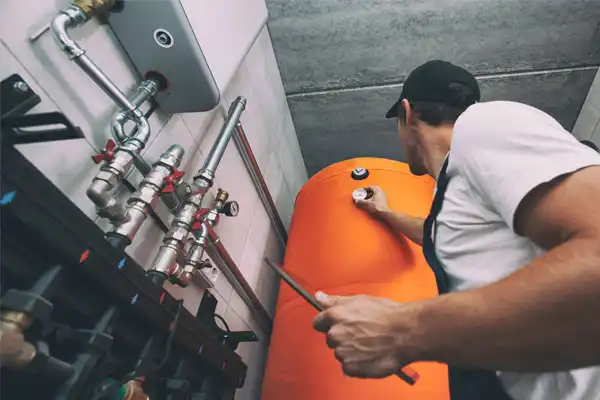
- Installing heating and HVAC equipment, including furnaces, heat pumps, air handlers, and related components.
- Maintaining systems through inspection, cleaning, adjustment, testing, and seasonal service.
- Diagnosing and repairing heating equipment, cooling equipment, controls, airflow issues, and related mechanical problems.
- Coordinating connected work involving refrigerant, ductwork, plumbing connections, gas installation service, or electrical requirements where appropriate.
- Helping customers decide whether repair, maintenance, or replacement is the sensible path.
That last responsibility is not glamorous, but it is important. A heating contractor is part technician, part translator. The equipment speaks in symptoms. The customer speaks in comfort, cost, and timing. The contractor has to turn one language into the other without making it weird.
The difference between a contractor and a parts changer
A parts changer sees a symptom and swaps the most suspicious component. A contractor diagnoses a system. The difference often shows up in callbacks.
For example, suppose a blower motor fails. Replacing it may restore operation. But if the contractor does not check airflow, filter condition, duct restrictions, or operating conditions, the new motor may inherit the old motor’s miserable life. Suppose a furnace shuts down intermittently. A rushed technician might blame the thermostat. A careful one checks the operating sequence and safeties before accusing the little plastic rectangle on the wall. Thermostats cause problems, certainly, but they also get blamed for crimes they did not commit.
Professional judgment also includes knowing when not to oversell precision. Not every older system needs immediate replacement. Not every repair is worth doing. Not every noise is a catastrophe. A skilled heating contractor can separate urgent safety or reliability concerns from ordinary wear and nuisance issues. That kind of judgment comes from seeing many systems in many buildings, including the creatively installed ones that make technicians pause, inhale, and say, “Well, that’s one way to do it.”
Why proper installation affects energy use and reliability
Heating and cooling equipment depends on setup. With air conditioners and heat pumps, proper refrigerant charging can reduce energy consumption and lower the risk of failure. Correct equipment sizing matters too. These details are not decorative paperwork. They affect how the system runs every day.
A poorly charged air conditioner or heat pump may struggle to move heat efficiently. A system with poor airflow may run longer, perform worse, or experience added strain. An oversized or undersized unit may create comfort problems that no thermostat setting can fully solve. Installation quality can decide whether the system spends its life humming along or behaving like a celebrity with a rider full of demands.
This is why low bid shopping can backfire. Price matters, obviously. Nobody wants to pay extra just to fund a contractor’s boat dreams. But if one quote is dramatically lower than the others, the question is what has been left out. Proper sizing, setup, verification, and commissioning take time. So does clean work. Heating and air conditioning systems are too expensive to treat installation as a race.
What homeowners and building managers should ask
The best customers are not the ones who know every technical term. They are the ones who ask clear questions and expect clear answers. Before hiring a heating contractor, it is reasonable to ask about experience with your type of system, the scope of the work, what is included in maintenance, and how the contractor handles repairs versus replacement recommendations.
For installation, ask how the contractor determines equipment size and verifies operation. For repair, ask what was tested and what evidence supports the diagnosis. For maintenance, ask what the visit includes beyond a quick look and a sticker. If refrigerant work is involved, ask whether the technician is qualified for that work. If plumbing or electrical work is part of the project, ask who performs it and whether a Plumber or Electrician is needed.
A confident contractor will not be offended by practical questions. They may even appreciate them, because an informed customer is less likely to expect miracles from a dirty filter or ask a 20-year-old system to perform like it has been drinking green juice and doing Pilates.
When heating work connects to other services
Many mechanical service companies offer a wide menu because building systems overlap. A customer might call for heating maintenance and later use the same company for air conditioning tune-up, water heater installation, drain cleaning, or plumbing leak repair. That can be convenient, especially when the company has qualified people in each area.
The important word is qualified. Plumbing repiping is not furnace troubleshooting. Hydrojetting is not heat pump installation. Water softener installation is not air conditioning repair. Septic system service is its own creature entirely, and it has a personality. A broad service company may handle all of these, but the technician’s training and licensing should match the work.
There is also a practical scheduling advantage to having related services coordinated. If a mechanical room contains a furnace, water heater, drains, gas piping, and electrical connections, one project can affect another. Replacing equipment may reveal access problems, drainage issues, or code-related concerns that need the right trade involved. A good contractor knows when to handle the work and when to bring in the correct specialist. Pride is useful for craftsmanship. It is less useful when standing next to something that clearly requires another license.
A quick guide to who does what
When the problem is vague, customers sometimes do not know whom to call. The names sound similar, and every service van has enough lettering to qualify as a rolling novel. This compact guide helps separate the common roles:
| Service provider | Typical focus | |---|---| | Heating contractor | Heating equipment, HVAC system installation, maintenance, and repair | | Air conditioning contractor | Cooling systems, air conditioning repair, maintenance, and installation | | Plumber | Piping, leaks, drains, water heaters, repiping, and related plumbing systems | | Electrician | Electrical wiring, circuits, panels, and electrical infrastructure | | Septic system service | Septic tanks, drain fields, and related wastewater systems |
The overlap is real, but the distinctions matter. A heating contractor may work on electrical components within HVAC equipment, and a plumbing and HVAC company may offer water heater repair and furnace repair service from the same office. Still, the right person for the job depends on the system involved and the scope of work.
What separates a good heating contractor from a merely available one
Availability matters, especially when the house is cold. But the first person who can arrive is not always the best person to touch expensive equipment. A good heating contractor brings process, communication, and restraint.
Process means they diagnose before acting. Communication means they explain what they found in language a normal person can survive. Restraint means they do not turn every minor issue into a four-alarm sales event. They also respect the connected nature of HVAC systems. If airflow is poor, they talk about airflow. If installation quality caused the issue, they say so. If an electrical or plumbing specialist is needed, they do not pretend otherwise just to keep the invoice tidy.
Good contractors also care about maintenance because they have seen what neglect does. Filters clog. Coils get dirty. Drains plug. Blowers suffer. Heat exchangers, burners, pumps, and controls age. Outdoor units collect debris and indignities. None of this is shocking, but it is easy to ignore until comfort disappears. Preventive service may not make for thrilling dinner conversation, but neither does explaining to guests why everyone is wearing coats indoors.
The real value: comfort, safety, and fewer surprises
A heating contractor’s work is not only about machinery. It is about making buildings livable. Heat in winter, cooling in summer, air that moves properly, equipment that operates as intended, and repairs that solve the actual problem rather than the most convenient symptom. That is the job.
The best heating contractors understand that HVAC systems are practical, connected, and occasionally temperamental. They install equipment with attention to sizing and setup. They maintain systems before small problems become expensive ones. They repair with evidence, not guesswork. They coordinate with plumbers, electricians, and other trades when the work crosses boundaries. They know that a heat pump is not just an air conditioner with a winter hobby, and that a furnace does not become reliable through optimism alone.
When the system works, nobody thinks about it. That is the goal. Warm rooms, reasonable bills, quiet operation, and no mysterious clanking at 2 a.m. A heating contractor helps make that ordinary comfort possible. It may not sound heroic, but on a cold morning when the air coming from the register is warm, steady, and blessedly boring, it feels close enough.
Name: Service Lion Plumbing Heating Air Electric
Address: 521 W Briardale Ave, Orange, CA 92865, United States
Phone: (657) 567-7305
Website: https://callservicelion.com/
Email: [email protected]
Hours:
Monday: Open 24 hours
Tuesday: Open 24 hours
Wednesday: Open 24 hours
Thursday: Open 24 hours
Friday: Open 24 hours
Saturday: Open 24 hours
Sunday: Open 24 hours
Open-location code: R48R+WV Orange, California, USA
Map/listing URL:
https://www.google.com/maps/search/?api=1&query=Google&query_place_id=ChIJQU4LBWHV3IARtnABtyykSA4
Google Map:
Socials:
https://www.facebook.com/ServiceLionCA/
https://www.youtube.com/channel/UCR_L35QzsRTxYZtX8PxJvPw
Local Service Information
Service Lion Plumbing Heating Air Electric provides plumbing, drain, heating, air conditioning, and electrical services from its Orange, California location.The company serves homeowners and properties throughout Orange and communities across Orange County and surrounding areas.
Available services include plumbing repairs, water heater work, drain and sewer services, heating and cooling service, electrical repairs, panels, lighting, outlets, and related home-system work.
Service is available for residential properties as well as light commercial needs described within the company's local service-area information.
The company's website emphasizes locally operated service, coordinated home-system support, and practical scheduling for plumbing, HVAC, and electrical needs.
The matching public business listing shows the Orange location as open 24 hours a day, seven days a week.
For service information or scheduling, call (657) 567-7305 or visit https://callservicelion.com/.
The public map listing identifies the business at 521 W Briardale Ave, Orange, CA 92865 and can be used for location and direction information.
Popular Questions About Service Lion Plumbing Heating Air Electric
What services does Service Lion Plumbing Heating Air Electric provide?
The company provides plumbing, drain and sewer, heating, air conditioning, and electrical services. Its published services include plumbing repair, water heaters, drain clearing, sewer work, HVAC repair and installation, electrical repairs, panels, circuit breakers, lighting, outlets, and related services.
Where is Service Lion Plumbing Heating Air Electric located?
The matching business location is 521 W Briardale Ave, Orange, CA 92865, United States.
What areas does Service Lion Plumbing Heating Air Electric serve?
The company serves Orange County and surrounding communities. Its published service-area information includes Orange, Anaheim, Brea, Yorba Linda, Fullerton, Huntington Beach, Newport Beach, Costa Mesa, Irvine, Lake Forest, and additional nearby cities.
Is Service Lion Plumbing Heating Air Electric open 24 hours?
The matching public business listing shows the location as open 24 hours on Monday through Sunday.
Does Service Lion Plumbing Heating Air Electric work on drains and sewer lines?
Yes. Published services include drain clearing, rooter service, camera inspection, hydro jetting, sewer line repair and installation, water line work, slab leak detection, and trenchless sewer line repair.
Does Service Lion Plumbing Heating Air Electric provide heating and air conditioning service?
Yes. Its published HVAC services include air conditioning repair and installation, heating service, furnace work, heat pumps, air ducts, indoor air quality assessments, and thermostat installation.
Does Service Lion Plumbing Heating Air Electric provide electrical service?
Yes. Published electrical services include repairs and installations, electrical panels, circuit breakers, safety inspections, lighting, outlets and switches, surge protection, generators, and EV charging equipment installation.
How can I contact Service Lion Plumbing Heating Air Electric?
Call (657) 567-7305.
Email: [email protected]
Website: https://callservicelion.com/
Facebook: https://www.facebook.com/ServiceLionCA/
Landmarks Near Orange, California
Old Towne Orange Historic District
A central historic district and useful geographic reference point for the Orange community.
Plaza Park
A well-known public gathering point in the center of Old Towne Orange.
Orange Public Library & History Center
A civic landmark serving residents near central Orange.
Hart Park
A major public park and recreation area south of central Orange.
Eisenhower Park
A public park serving neighborhoods in northern Orange.
Santiago Oaks Regional Park
A regional recreation and open-space landmark on the eastern side of Orange.
Irvine Regional Park
A large regional park and recognizable reference point east of the city.
Orange Park Acres
A distinctive residential community and service-area reference point in eastern Orange.
El Modena
An established Orange neighborhood that provides a practical local coverage reference.
Glassell Street
One of the city's principal north-south streets and a useful route through central Orange.
Lincoln Avenue
A major east-west roadway serving northern Orange and nearby communities.
State Route 55
A primary regional freeway connecting Orange with other parts of Orange County.